Travel rarely changes overnight. Instead, it evolves quietly, shaped by shifting expectations, new technologies, and the subtle ways people choose to spend their time and money. But when you look at the travel trends of 2026, that evolution is no longer subtle.
Travellers are asking for more control, more meaning, and more flexibility from every journey they take, and nowhere is that expectation more evident than in accommodation planning.
Understanding the trends reshaping accommodation choices and travel itineraries in 2026 is essential for agents who want to remain not just relevant, but indispensable.
2026 will not be business as usual
Location, location, location. For decades, the conversation began with geography: Paris, Provence, the Pyrenees. Now it begins with experiences.
Clients ask what they want to do, how they want to feel, and whether their travel can capture a journey bigger than a place.
That shift is driven by a mix of cultural currents: a weariness with overexposed hotspots, a hunger for deeper and slower experiences, the blending of work and leisure, and a desire for bookings that feel like options rather than hostage contracts.
The question “Where?” has become a minor follow-up to “What?” and “How?”
This change reshapes accommodation planning. Hotels aren’t just containers for sleep; they are home bases for local discovery, productivity hubs for remote work, anchors for sustainable choices, and safe harbours when plans change. Agents who grasp that nuance will design trips that feel effortless and personal.
And the right hotel booking tools will make that possible.
Experiential & slow travel: Choosing the pace before the place
The rise of experiential travel trends is a recalibration of the processes we’ve built. Travellers want trips shaped around sequences of moments: a wine harvest in Bordeaux, a ceramics workshop in Provence, a coastal rail journey stitched together town by town. This logic fuels multi-stop itineraries, where hotel-hopping becomes a creative act rather than a logistical burden.
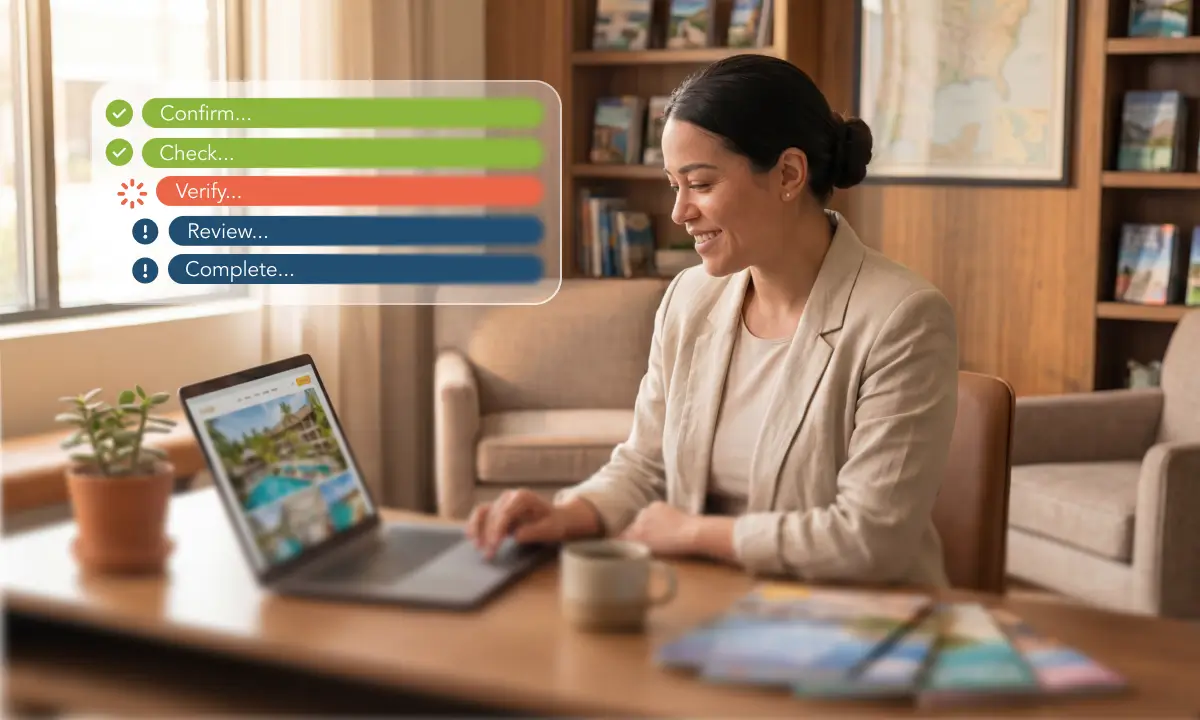
For agents, this means thinking of accommodation as part of an unfolding story. Instead of one reservation, you’re stitching together chapters, and you need booking tools for travel agents that allow you to visualise, edit and confirm the whole arc quickly and confidently.
Sustainable & conscious choices: Ethics that matter
Sustainability has moved from marketing line to decision driver. Travellers notice a lodge that supports conservation, a hotel that reduces waste, or a property that employs nearby communities. In 2026, accommodation planning will increasingly include verifying eco-credentials and recommending alternatives when destinations are under pressure.
Agents who surface conscious options early turn values into tangible trust.
Flexible bookings: Freedom without friction
Freedom is the new luxury. Whether extending a stay due to business demands or shortening a trip for personal reasons, flexible hotel bookings are now expected. This shift is built on partnership.
Hotels with adaptable booking options empower agents to design ambitious itineraries without fear and clients to travel with confidence.
Corporate travel redefined: Wellbeing, productivity & inclusion
Modern business travel looks very different to the past. Today’s corporate travel trends prioritise wellness, accessibility and productivity alongside efficiency. Travellers need accommodation that supports work, recovery and inclusion, not just proximity to meetings.
Agents who align hotel choice with corporate values become strategic partners, not transactional suppliers.
AI personalisation: Smarter, not colder
The role of AI in travel is not to replace human judgement, but to sharpen it. When built into hotel booking tools, artificial intelligence can surface the most relevant options faster, combining availability, preferences, pricing patterns and timing. The result is less searching, more confidence, and more time for agents to do what they do best: curate.
Travel Trends 2026: Travel agents remain the real advantage
Taken together, these travel trends point to a clear truth: agents matter more, not less. They are translators of intention, designers of flow, and problem-solvers when plans shift.
Global Accommodation and the StayGlobal platform equips agents with the technology and support to meet these expectations, from flexible hotel bookings and AI-driven matching to intuitive booking tools for travel agents and human expertise when it counts.
In a year that rewards thoughtful planning over simple transactions, the agents who pair insight with the right technology will lead the market.